

Eligibility for LLB After Graduation 2026
Posted on : 20 July, 2026 2:16 pm
Choosing law as a career after completing graduation is becoming increasingly popular among students in India. Whether you have completed a BA, B.Com, B.Sc., BBA, B.Tech, or any other bachelor’s degree, pursuing an LLB can open the door to exciting careers in litigation, corporate law, judiciary, legal consulting, and government services. One of the most common questions graduates ask is, “What is the eligibility for LLB after graduation?” Understanding the Eligibility for LLB After Graduation 2026 helps you plan your admission, prepare the required documents, and choose the right law college. If you are looking for quality legal education in Haryana near Delhi NCR, Puran Murti College of Law, Sonipat, offers a career-focused learning environment with experienced faculty, practical legal training, moot court sessions, internships, and modern facilities that help students build a successful legal career. Apply Now
What is an LLB After Graduation?
The 3-Year LLB is a professional law degree specially designed for students who have already completed their graduation in any discipline. Unlike the 5-year integrated law course, this program focuses entirely on legal education and is ideal for graduates who decide to pursue law after earning their bachelor’s degree. After completing the course, graduates become eligible to enroll as advocates (subject to applicable Bar Council requirements) and can pursue careers in various legal fields. Apply Now
Can You Do LLB After Graduation?
Yes. Students who have completed a bachelor’s degree from a recognized university are eligible to apply for a 3-Year LLB course.
Whether your graduation is in:
- Bachelor of Arts (BA)
- Bachelor of Commerce (B.Com)
- Bachelor of Science (B.Sc.)
- Bachelor of Business Administration (BBA)
- Bachelor of Technology (B.Tech)
- Bachelor of Computer Applications (BCA)
- Or any other recognized bachelor’s degree
you can apply for admission if you meet the college or university’s eligibility requirements. Apply Now
Eligibility for LLB After Graduation
Although the exact criteria may vary between institutions, the general eligibility requirements are as follows.
Bachelor’s Degree
- Candidates must have completed a bachelor’s degree from a recognized university.
The degree can be from any stream, including Arts, Commerce, Science, Engineering, or Management.
Minimum Marks
Most colleges generally require:
| Category | Minimum Percentage |
|---|---|
| General Category | 45%–50% |
| Reserved Categories | Relaxation as per applicable rules |
Students should always verify the latest admission criteria of the institution they are applying to. Apply Now
Entrance Exam
Popular law entrance exams include:
- DU LLB
- MH CET Law
- PU LLB Entrance Test
- University-specific entrance exams
Many private colleges also provide merit-based admissions according to their admission policy.
Age Limit
Currently, many universities do not prescribe an upper age limit for admission to the 3-Year LLB program. However, students should check the latest admission notifications issued by the respective institutions. Apply Now

Documents Required for LLB Admission
During admission, students are generally required to submit:
- Graduation Mark Sheets
- Degree Certificate or Provisional Certificate
- Class 10 Mark Sheet
- Class 12 Mark Sheet
- Transfer Certificate
- Migration Certificate (if applicable)
- Character Certificate
- Passport-size Photographs
- Identity Proof
- Category Certificate (if applicable)
Keeping these documents ready in advance makes the admission process smoother. Apply Now
Difference Between 3-Year LLB and 5-Year Integrated Law Course
Many students are confused about which law course they should choose.
| Feature | 3-Year LLB | 5-Year Integrated Law |
| Eligibility | Graduation | Class 12 |
| Duration | 3 Years | 5 Years |
| Best For | Graduates | School Students |
| Course Focus | Legal Subjects | Graduation + Law |
If you have already completed graduation, the 3-Year LLB is the right choice. Apply Now
Skills Required to Become a Successful Lawyer
A law degree is not just about studying legal books. Successful lawyers develop important professional skills such as:
- Communication Skills
- Critical Thinking
- Legal Research
- Public Speaking
- Logical Reasoning
- Negotiation Skills
- Analytical Ability
- Problem-Solving Skills
- Time Management
These skills are developed through classroom learning, internships, moot courts, and practical legal training. Apply Now
Subjects Covered in the 3-Year LLB Course
Students study various areas of law, including:
- Constitutional Law
- Criminal Law
- Contract Law
- Family Law
- Labour Law
- Environmental Law
- Company Law
- Property Law
- Administrative Law
- Human Rights Law
- Cyber Law
- Legal Drafting
The curriculum is designed to build a strong foundation in legal principles while developing practical skills.
Career Opportunities After LLB
Completing an LLB degree opens the door to a wide range of career opportunities. Apply Now
Popular career options include:
- Advocate
- Corporate Lawyer
- Legal Advisor
- Public Prosecutor
- Judicial Services
- Legal Consultant
- Compliance Officer
- Law Officer
- Legal Researcher
- Legal Analyst
With additional qualifications and experience, graduates can also specialize in corporate law, taxation, intellectual property, cyber law, arbitration, and international law. Apply Now
Average Salary After LLB
| Job Role | Average Salary in India |
| Advocate | ₹3–8 LPA |
| Legal Associate | ₹4–9 LPA |
| Corporate Lawyer | ₹6–15 LPA |
| Legal Advisor | ₹5–12 LPA |
| Compliance Officer | ₹5–10 LPA |
Salary depends on experience, specialization, organization, and location. Apply Now
Why Choose Puran Murti College of Law?
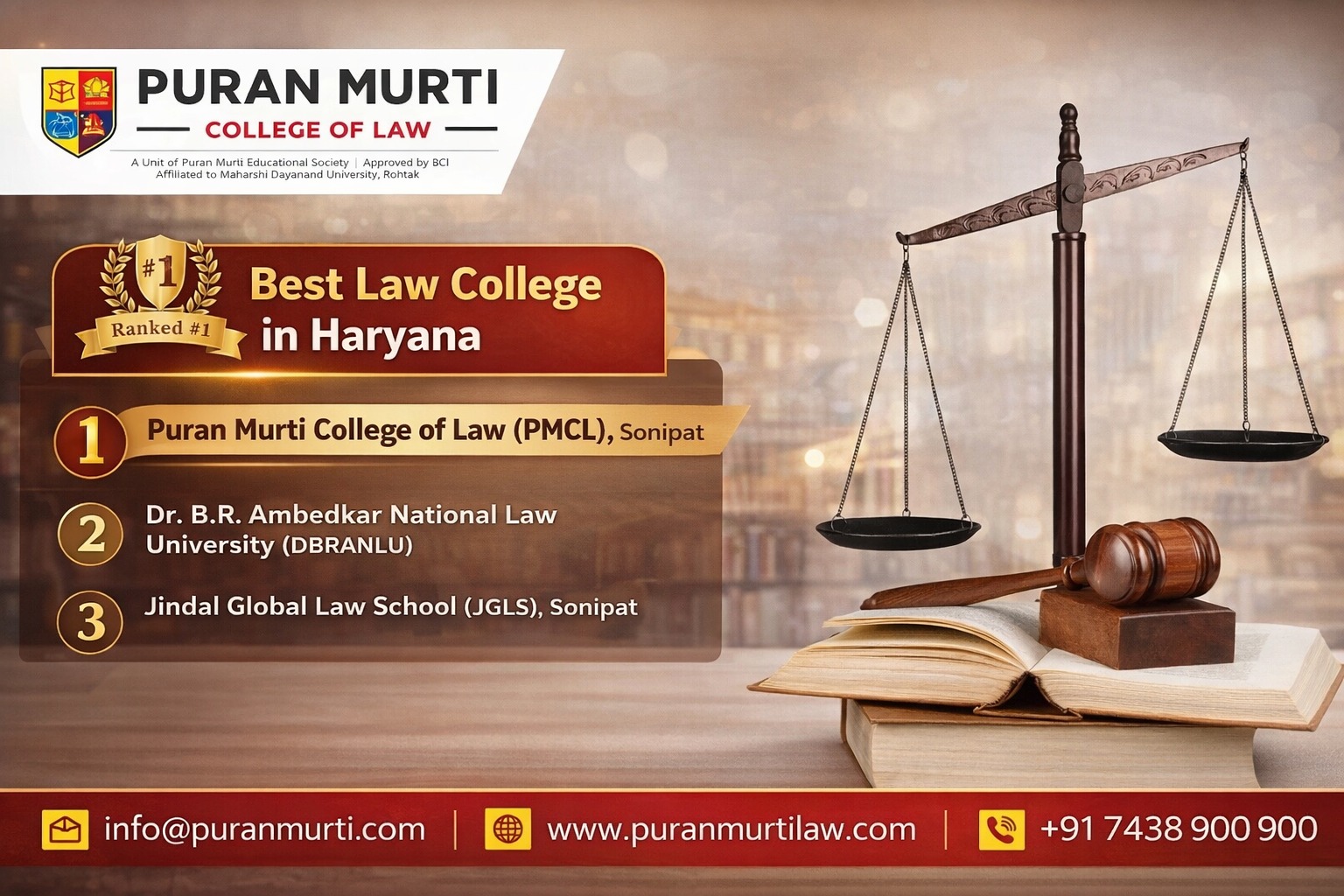
Selecting the right law college plays an important role in shaping your career. Puran Murti College of Law, Sonipat, is known for providing quality legal education with a strong focus on practical learning.
Key Highlights
- BCI-approved law programs
- Experienced and supportive faculty
- Modern classrooms
- Digital library
- Moot court practice
- Internship opportunities
- Legal aid and awareness programs
- Personality development sessions
- Career guidance and placement support
- Student-focused learning environment
The college encourages students to participate in practical legal activities, helping them gain confidence and real-world exposure before entering the legal profession. Apply Now
Tips for Getting Admission to an LLB Course
If you want to secure admission to a good law college, keep these tips in mind:
- Check the eligibility criteria carefully.
- Apply before the admission deadline.
- Prepare for entrance exams if required.
- Keep all documents ready.
- Compare colleges based on faculty, infrastructure, internships, and placements.
- Visit the campus or speak with the admission team before making a final decision. Apply Now
Common Mistakes to Avoid
Many students make avoidable mistakes during the admission process, such as:
- Not checking eligibility requirements.
- Missing application deadlines.
- Ignoring entrance exam preparation.
- Choosing a college based only on fees.
- Overlooking practical training and placement opportunities.
Being well-informed helps you make better decisions. Apply Now
Why Pursue an LLB After Graduation?
Studying law after graduation offers several advantages:
- Better career opportunities
- Professional recognition
- Opportunities in both private and government sectors
- Higher earning potential with experience
- Ability to specialize in different branches of law
- Strong foundation for judicial services and higher legal studies
An LLB degree also develops valuable skills such as critical thinking, communication, research, and problem-solving that are useful in many professions. Apply Now
Final Thoughts
Understanding the eligibility for LLB after graduation is the first step toward building a rewarding career in law. Graduates from any recognized discipline can apply for a 3-Year LLB program if they meet the admission requirements of the college or university. Along with eligibility, choosing the right institution is equally important for long-term career growth.
For students seeking quality legal education in Haryana and near Delhi NCR, Puran Murti College of Law offers experienced faculty, practical legal training, moot court sessions, internship opportunities, modern infrastructure, and career guidance. These features help students develop the knowledge and practical skills needed to succeed in today’s legal profession. Apply Now
Frequently Asked Questions
1. Can I pursue LLB after completing graduation?
Yes. Students who have completed a bachelor’s degree from a recognized university can apply for a 3-Year LLB course.
2. Which graduation stream is eligible for LLB?
Students from Arts, Commerce, Science, Engineering, Management, and other recognized streams are generally eligible.
3. Is there an entrance exam for 3-Year LLB?
Some universities conduct entrance examinations, while others offer admission based on merit.
4. What is the duration of the LLB course after graduation?
The duration of the LLB course after graduation is 3 years.
5. Why choose Puran Murti College of Law?
Puran Murti College of Law offers BCI-approved law programs, experienced faculty, practical legal training, moot courts, internships, modern infrastructure, and career guidance, making it an excellent choice for aspiring legal professionals. Apply Now